: A Survival Guide to Threats from Land, Sea, and Sky
The Life of a Penguin is Never Safe 🐧
In the vast, seemingly serene landscapes of the Southern Hemisphere, a constant drama of life and death unfolds. For penguins, every moment is a calculated risk. A journey to the sea for food is a plunge into a world of powerful marine hunters, while life on land means constant vigilance against opportunistic thieves from the sky. The life of a penguin is a masterclass in survival, played out against a backdrop of ever-present danger.
We often see penguins as charming, waddling birds, but in their world, they are both skilled predators and sought-after prey. Understanding their predators is not just about listing the “bad guys”; it’s about appreciating the incredible evolutionary arms race that has shaped these birds into the resilient, intelligent, and agile creatures we admire today. So, let’s look beyond the cute exterior and step into the high-stakes world of a penguin, where threats lurk in the deep blue sea, patrol the skies above, and sometimes, even hide in plain sight on the very land they call home. 🌊
The Ocean’s Apex Hunters: Threats from the Deep Blue
The ocean is a penguin’s dining room, but it’s also the most dangerous place in their world. Here, they face predators that are bigger, faster, and ruthlessly efficient.
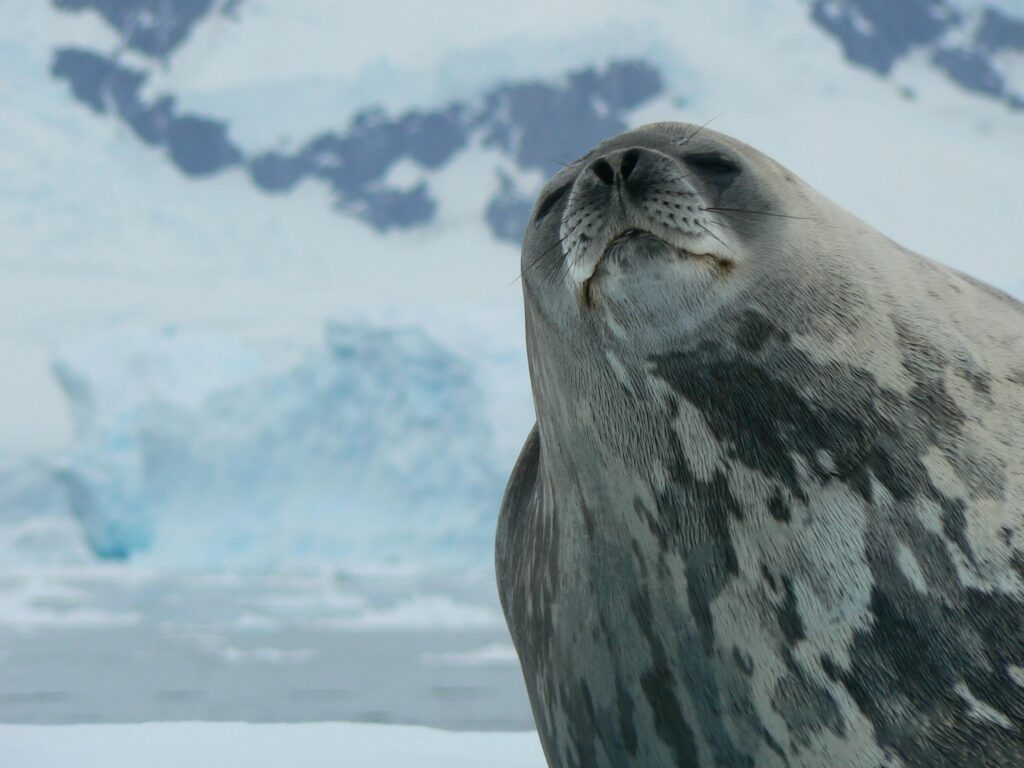
1. The Leopard Seal (Hydrurga leptonyx): The Antarctic’s “Super-Predator”
If there is one predator that strikes fear into the heart of any Antarctic penguin, it is the leopard seal. With its long, serpentine body, massive jaws, and powerful front flippers, it is a perfectly evolved penguin-hunting machine.
- The Ambush Strategy: Leopard seals are masters of stealth. As documented by the British Antarctic Survey (BAS), they often patrol the edges of ice floes and the coastlines of penguin colonies, waiting for the birds to enter or exit the water. They use the murky water and the noise of the surf as cover, striking with explosive speed from below.
- Intelligent Hunting Techniques: A 2024 study published in Marine Mammal Science revealed that leopard seals exhibit remarkable cognitive abilities. They can learn the daily routines of a penguin colony, positioning themselves at the most active entry points at the right times. Some have even been observed “playing” with their prey, a behavior that, while grim, may help them hone their hunting skills.
- The “Threshing” Method: Once a penguin is caught, the leopard seal employs a brutal but effective technique known as “threshing.” It violently thrashes the penguin’s body against the water’s surface to skin it and break it into smaller, more manageable pieces. This raw display of power is a stark reminder of the predator-prey dynamics at play.
Penguins, however, are not helpless. They often enter the water in large groups to dilute the risk (“safety in numbers”). Their incredible underwater agility and “porpoising” behavior—leaping out of the water while swimming at speed—can make them a difficult target for a seal to track.
2. The Orca (Orcinus orca): The Ocean’s Master Strategist
While leopard seals are a constant threat, the orca, or killer whale, represents a more formidable, albeit less frequent, danger. Orcas are highly intelligent, social hunters who employ complex, coordinated strategies.
- “Wave-Washing” Technique: One of the most stunning examples of orca intelligence is the “wave-washing” technique, famously captured by BBC Earth’s Frozen Planet series. A pod of orcas will swim in unison to create a large wave that washes a penguin (or seal) off a small ice floe and into the water, where other members of the pod are waiting. This requires incredible teamwork and communication.
- Specialized Pods: Researchers believe that not all orcas hunt penguins. According to the Center for Whale Research, different orca ecotypes specialize in different prey. The “Type B” orcas in Antarctica are known to be the primary penguin predators, having adapted their hunting methods specifically for this prey.
- A Game of Cat and Mouse: A 2023 observation published in Aquatic Mammals described orcas seemingly “toying” with penguins, herding them for long periods before making a kill. Scientists suggest this might be a way for adult orcas to teach their young the complex skills required for a successful hunt.
3. Sharks and Sea Lions: Regional Threats
Beyond the polar regions, other marine predators take over.
- Great White Sharks (Carcharodon carcharias): Around the coasts of South Africa and Australia, penguins like the African and Little Blue Penguin must contend with sharks.
- Sea Lions: In places like the Galápagos and the coasts of South America, sea lions are a significant threat, especially to younger, less experienced penguins.
The Winged Menace: Threats from the Sky
Life on land is safer, but by no means completely secure. Penguin colonies are bustling, noisy places, and this activity attracts opportunistic predators from the air, who primarily target the most vulnerable: eggs and chicks.
1. The Skua (Stercorarius): The Pirate of the Penguin Colony
Skuas are aggressive, intelligent, and relentless. These large, gull-like birds are the primary aerial predators in many Antarctic and sub-Antarctic penguin colonies.
- Opportunistic Thieves: Skuas are masters of timing. They watch for any moment a parent penguin is distracted or leaves its nest unattended. In a flash, they can swoop in and snatch an egg or a small chick. A study by National Geographic highlighted their ability to work in pairs—one bird distracts the adult penguin while the other raids the nest.
- A Constant Battle of Wits: Penguins have evolved strong defensive behaviors. They nest in dense colonies for collective defense and will use their sharp beaks and powerful flippers to fend off attacking skuas. It’s a constant, noisy battle for survival.
2. The Giant Petrel (Macronectes): The Vulture of the South
Giant petrels are formidable birds, with a wingspan of over 2 meters (6.5 feet). They are often seen patrolling the edges of penguin colonies, looking for any sign of weakness.
- Targeting the Weak: Unlike the swift skua, giant petrels often target sick, injured, or abandoned chicks. They play a role as nature’s “clean-up crew,” but they are also capable of taking healthy chicks if the opportunity arises.
- A Fearsome Presence: Their sheer size and powerful, hooked beak are often enough to intimidate parent penguins, forcing them to abandon their young.
The Invisible Enemy: Threats Introduced by Humans
Perhaps the most insidious threats to penguins are the ones they never evolved to face. On many sub-Antarctic islands, human activity has introduced terrestrial predators, with devastating consequences.
The Scourge of Introduced Predators
On islands where penguins once bred in safety, with no land-based threats, the introduction of mammals has been catastrophic.
- Rats, Cats, and Stoats: On islands like South Georgia and the Falklands, introduced rodents and carnivores have decimated populations of burrow-nesting penguins. These predators raid nests, eat eggs, and kill chicks, which have no natural defense against them.
- Eradication Efforts: Fortunately, massive conservation efforts are underway. Organizations like the South Georgia Heritage Trust have led successful, large-scale projects to eradicate invasive species and restore these islands as safe havens for penguins. A 2025 report on the project’s success shows a dramatic recovery in bird populations, offering a beacon of hope.
Curious about how penguins are adapting to other changes? Read our post on how African penguins beat the heat.
The Indirect Threat: Climate Change and Human Activity
The greatest modern threat is not a single predator, but the widespread impact of human activity.
- Shifting Predator-Prey Dynamics: Climate change is altering the very map of survival. As sea ice melts, the ranges of penguins and their predators are shifting, bringing them into contact in new and unpredictable ways. For example, as warmer waters move south, some shark species are expanding their range, posing a new threat to Antarctic penguins.
- Food Chain Disruption: Overfishing and warming oceans disrupt the food supply, as we explored in our deep dive on the penguin diet. A weakened, starving penguin is far more vulnerable to predation. A 2024 study in Science Advances showed that malnourished penguin chicks have slower reaction times, making them easier targets for skuas.
Conclusion: A 360-Degree Battle for Survival 💡
The life of a penguin is a testament to resilience. They are caught in a complex, 360-degree battle for survival, facing highly specialized predators from the sea and the sky, and now, the invisible but pervasive threats introduced by humans. The sleek leopard seal, the intelligent orca, the audacious skua—these are not villains, but integral parts of a balanced ecosystem, the forces that have driven penguins to become the incredible survivors they are.
However, the balance is tipping. Introduced species and the overarching threat of climate change are rewriting the rules of this ancient game, and penguins are struggling to keep up. Their story is a powerful reminder that in nature, everything is connected. The health of the krill population affects a penguin’s ability to escape a leopard seal; the presence of a single rat on an island can doom an entire colony.
By understanding the full scope of threats they face, we can better appreciate the courage packed into these small, feathered bodies. And more importantly, we can take meaningful action—from supporting invasive species eradication projects to fighting climate change—to help them in their constant, courageous battle for survival. 🐧❤️