The Black “Helmet Strap” and the Story of One of the Most Numerous Penguins on Earth


The Antarctic continent and its surrounding islands are among the harshest environments on Earth. Temperatures plunge below freezing, katabatic winds roar across exposed rock, and winter darkness stretches for months. And yet, astonishingly, this frozen world sustains an abundance of life.
At the center of that life stands a symbol we all recognize: the penguin.
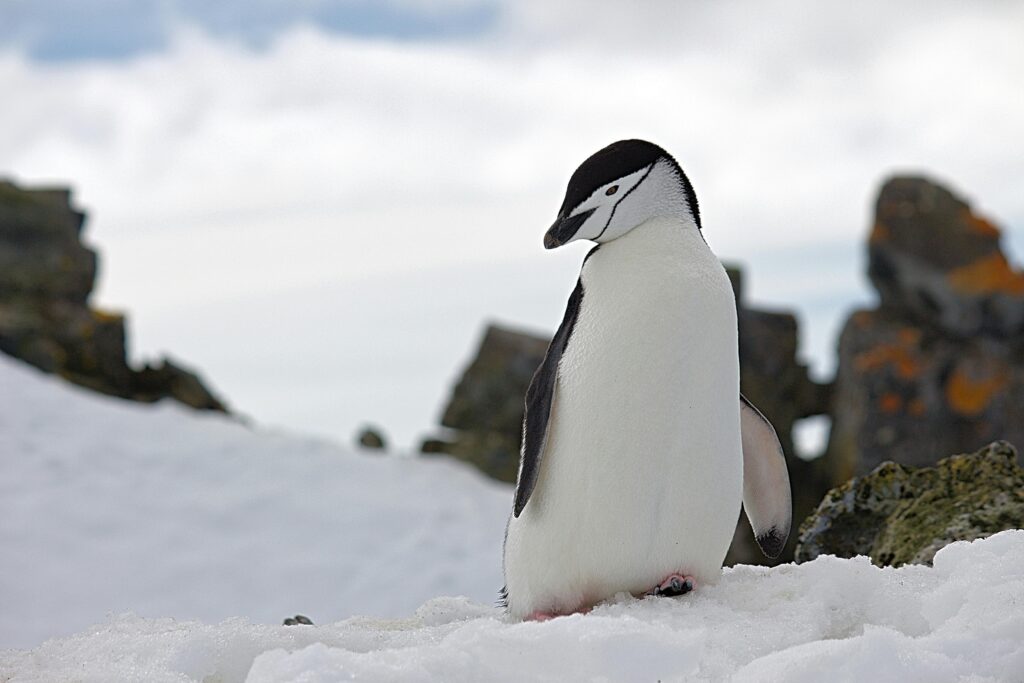
Among them, the Chinstrap Penguin (Pygoscelis antarcticus) is instantly identifiable. A thin black line runs beneath its chin, as if it has fastened a helmet strap before marching into the Antarctic wind. This simple mark gives the Chinstrap Penguin its name—and its unmistakable identity.
But beyond its charming appearance, the Chinstrap Penguin is one of the most numerous penguin species on Earth. In sheer population size, it rivals or surpasses nearly every other penguin species. It has been called, without exaggeration, one of the “dominant rulers” of the Antarctic ecosystem.
Yet even a ruler of ice can be vulnerable.
In this article, we explore the Chinstrap Penguin’s physical adaptations, habitat preferences, diet specialization, breeding strategy, remarkable microsleep behavior, and the emerging scientific evidence that links its future to climate change and krill fisheries. What we discover is not simply a story of abundance—but of ecological interdependence.
The Black Strap Beneath the Chin: Identity of the Chinstrap Penguin
The defining feature of the Chinstrap Penguin is obvious from its name. A narrow black band begins near each ear patch and curves beneath the chin, forming what looks like a military helmet strap.
This band is not decorative—it is diagnostic. It allows researchers and observers to distinguish Chinstrap Penguins from closely related species such as:
- Adélie penguin
- Gentoo penguin
All three belong to the genus Pygoscelis, often referred to as “brush-tailed penguins.” However, only the Chinstrap Penguin displays this complete black chin band.
Because of this marking, the species has also earned several nicknames:
- Ringed penguin
- Bearded penguin
- Stonecracker penguin (a reference to its loud, harsh calls)
That final nickname reflects another key trait: Chinstrap Penguins are famously vocal. In large colonies, their braying calls echo across rocky slopes in a constant chorus of territorial claims and social negotiation.
Physical Characteristics: Built for Ice and Water
The Chinstrap Penguin is a medium-sized penguin, standing approximately 68–76 cm tall and weighing between 3–6 kg depending on season and breeding condition. Males are typically slightly larger than females.
But size alone does not define adaptation.
Countershading: A Masterclass in Camouflage
Like most penguins, the Chinstrap Penguin exhibits classic countershading:
- Black back and head
- White belly and face
From above, its dark back blends with the deep ocean. From below, its white underside merges with the bright surface light. This dual camouflage reduces visibility to predators such as leopard seals.
Countershading is one of the most elegant evolutionary solutions in marine ecology.
Insulation and Waterproofing
Survival in subzero water requires extraordinary insulation. The Chinstrap Penguin relies on:
- Dense overlapping feathers
- A waterproof outer feather layer
- Thick subcutaneous fat
- Countercurrent heat exchange in flippers and legs
These adaptations allow the bird to forage in waters often hovering around −1.8°C (the freezing point of seawater).
Without these features, survival would be impossible.
Habitat and Distribution: Life on the Antarctic Peninsula

4
The Chinstrap Penguin is widely distributed around Antarctica and the Southern Ocean. Major breeding areas include:
- The Antarctic Peninsula
- South Sandwich Islands
- South Orkney Islands
- South Shetland Islands
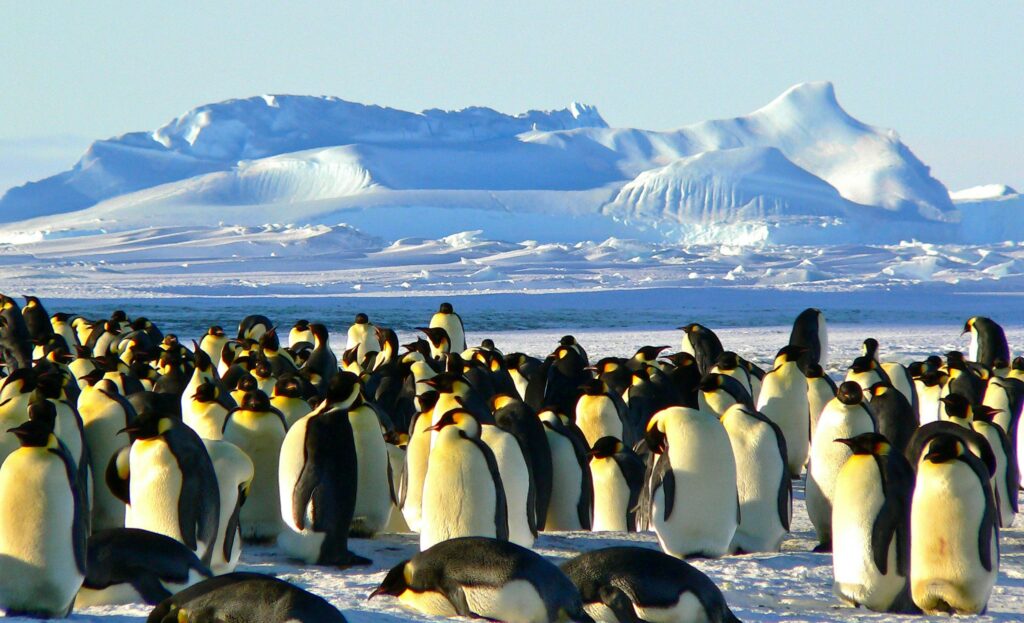
Unlike emperor penguins, which depend heavily on stable sea ice, Chinstrap Penguins prefer ice-free rocky slopes for nesting.
This distinction is crucial.
Because they avoid heavy pack ice and select exposed terrain, Chinstrap Penguins were once considered less vulnerable to sea ice decline.
However, that assumption has proven overly simplistic.
Diet: The Krill Connection
If the Chinstrap Penguin has a kingdom, its foundation is krill.
Specifically, Antarctic krill (Euphausia superba).
According to ecological studies, krill can constitute over 90–95% of the Chinstrap Penguin’s diet during breeding season. Small fish and squid are consumed occasionally, but krill remains dominant.
This dietary specialization has advantages:
- Efficient foraging
- Abundant prey during productive years
- Predictable seasonal food supply
Chinstrap Penguins often travel up to 80 km from breeding colonies to forage. Most dives last 20–30 seconds and remain under 40 meters, though maximum recorded depths exceed 70 meters.
Interestingly, Chinstrap Penguins also forage at night—possibly tracking the vertical migration of krill or avoiding daytime predators.
But specialization carries risk.
Krill abundance depends heavily on winter sea ice. Juvenile krill shelter beneath ice sheets. When sea ice declines, krill recruitment declines.
And when krill decline, so do Chinstrap Penguins.
Breeding Strategy: Survival Through Synchronization

4
The breeding season begins in late November to early December.
Males typically arrive first to reclaim nesting territories. They construct circular nests from small stones—a precious commodity in densely packed colonies.
These stone nests serve multiple purposes:
- Elevating eggs above meltwater
- Insulating against cold ground
- Signaling territory ownership
Females lay two eggs. Incubation lasts approximately 33–37 days, with parents alternating shifts every 5–10 days.
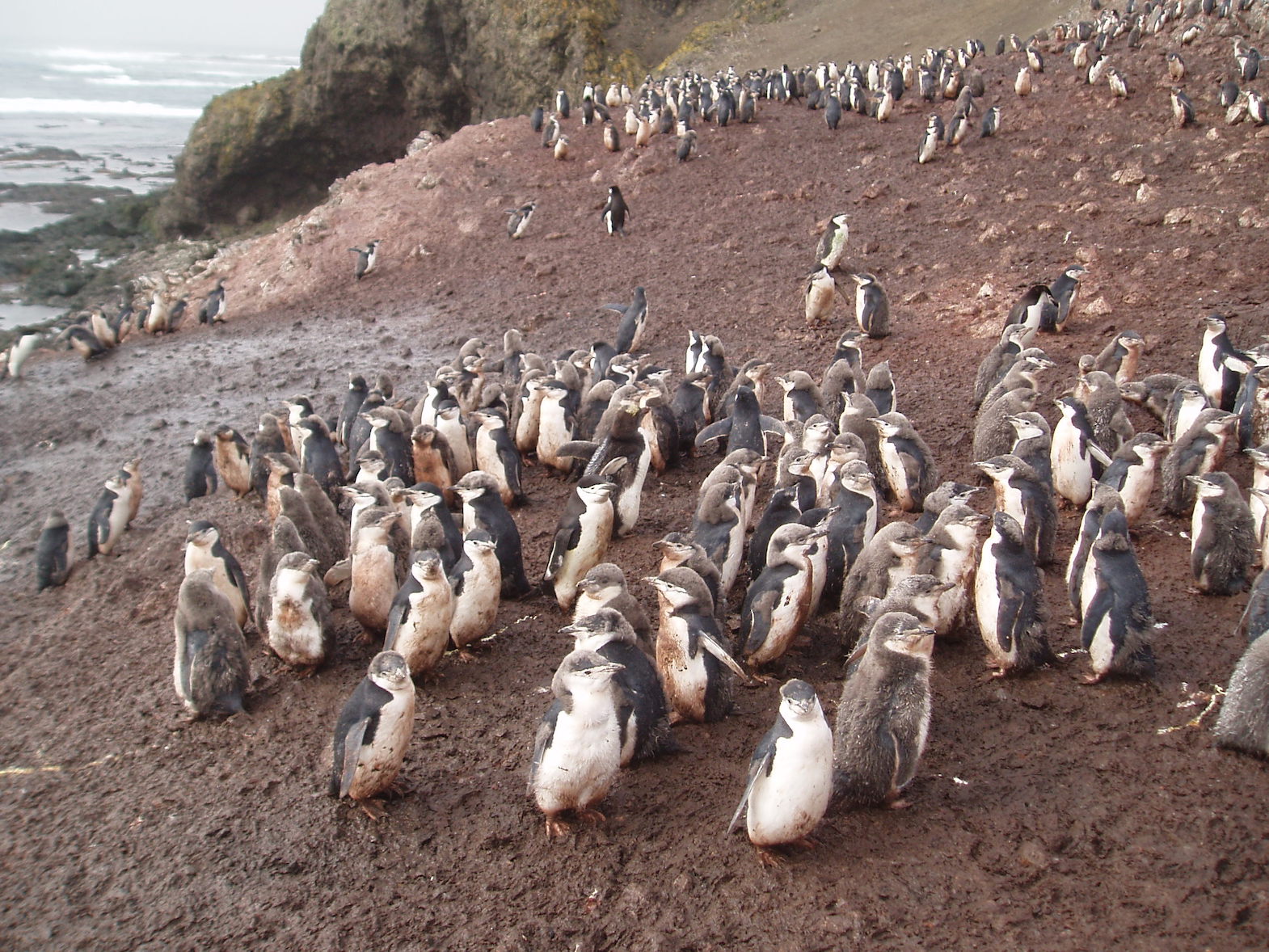
After hatching, chicks remain under parental guard for 20–30 days. Eventually, they form crèches—large groups of chicks huddling together for warmth and protection.
Unlike some penguin species that prioritize feeding one stronger chick, Chinstrap Penguin parents often attempt to raise both chicks successfully when food is abundant.
Fledging occurs at around 7–8 weeks of age. Juveniles then enter the ocean independently.
Average lifespan: 16–20 years.
The Most Astonishing Discovery: 10,000 Microsleeps a Day
One of the most remarkable findings about the Chinstrap Penguin emerged from recent sleep research.
During breeding season, Chinstrap Penguins must guard eggs and chicks continuously. Long, uninterrupted sleep is impossible.
So how do they survive sleep deprivation?
They don’t.
Instead, they fragment sleep into thousands of tiny segments.
Researchers discovered that breeding Chinstrap Penguins experience:
- Approximately 4-second sleep episodes
- Repeated over 10,000 times per day
- Accumulating to over 11 hours of total daily sleep
This phenomenon—called microsleep—allows the penguin to remain vigilant while maintaining essential neurological function.
In some cases, hemispheric sleep may occur, where one half of the brain rests while the other remains alert.
This strategy represents one of the most extreme sleep adaptations documented in wild birds.
And it underscores the intensity of breeding competition within dense colonies.
Aggression and Tobogganing: Personality of the Chinstrap Penguin
Chinstrap Penguins are often described as the most aggressive penguin species.
In massive colonies where space is limited, competition for nesting stones is fierce. Displays include:
- Head shaking
- Flipper waving
- Direct beak thrusts
Despite this feistiness, Chinstrap Penguins also display charming behaviors.
When traveling across snow or ice, they frequently use tobogganing—sliding on their bellies while pushing with feet and flippers. This movement conserves energy and increases speed over flat terrain.
It is efficient. And admittedly, adorable.
Population Status: Abundant but Uneven
The International Union for Conservation of Nature currently classifies the Chinstrap Penguin as “Least Concern.”
Global population estimates range widely, with millions of breeding pairs documented.
However, long-term monitoring reveals a more complicated picture.
Research from institutions such as British Antarctic Survey and Korea Polar Research Institute has documented significant regional declines along the Antarctic Peninsula.
Some colonies have decreased by more than 50% over the past several decades.
Why?
Two major pressures:
- Climate-driven krill decline
- Commercial krill fishing
Krill fisheries supply feed for aquaculture and health supplements. Concentrated harvesting near breeding grounds may intensify food competition during critical breeding months.
The overlap of warming winters and intense krill harvest correlates with reduced penguin reproductive success in certain years.
Abundance at the global scale does not erase vulnerability at the local scale.
Chinstrap Penguin: Symbol of Abundance, Indicator of Change
The Chinstrap Penguin embodies paradox.
It is:
- Numerous
- Energetic
- Adaptable
And yet, it is deeply tied to a fragile food web.
Its future depends on:
- Southern Ocean temperature trends
- Sea ice dynamics
- Sustainable krill management
- Marine protected area expansion
Organizations such as the Commission for the Conservation of Antarctic Marine Living Resources (CCAMLR) continue to debate marine protected areas around the Antarctic Peninsula.
The outcome will shape the next chapter of the Chinstrap Penguin’s story.
Final Reflection: The Ruler of Ice Under Watch
The thin black strap beneath the Chinstrap Penguin’s chin appears simple.
But behind it lies:
- Evolutionary specialization
- Behavioral ingenuity
- Ecological dependency
- Climate vulnerability
Once viewed solely as a symbol of Antarctic abundance, the Chinstrap Penguin is increasingly seen as an indicator species—revealing how rapidly the Southern Ocean is changing.
Even rulers must adapt.
And in Antarctica, survival is never guaranteed—not even for millions.
The Chinstrap Penguin continues to dive, breed, defend, and endure beneath polar skies.
But its story is no longer just one of dominance.
It is a story of balance.
And balance, in our warming world, is delicate.
Soscelis antarcticus, Antarctic Wildlife, Penguin Species, Antarctic Peninsula, Krill Ecosystem, Penguin Breeding, Climate Change Antarctica, Microsleep Research, Southern Ocean Ecology