All the Penguins of the World Series
The Charming Architect Who Builds with Stones and Confesses Love
Introduction: The Penguin That Truly Represents Antarctica
When people imagine Antarctica, they often picture the emperor penguin first.
Yet the penguin most widely distributed across the Antarctic coastline, and the one that leaves the strongest impression on those who visit the continent, is the Adélie penguin.
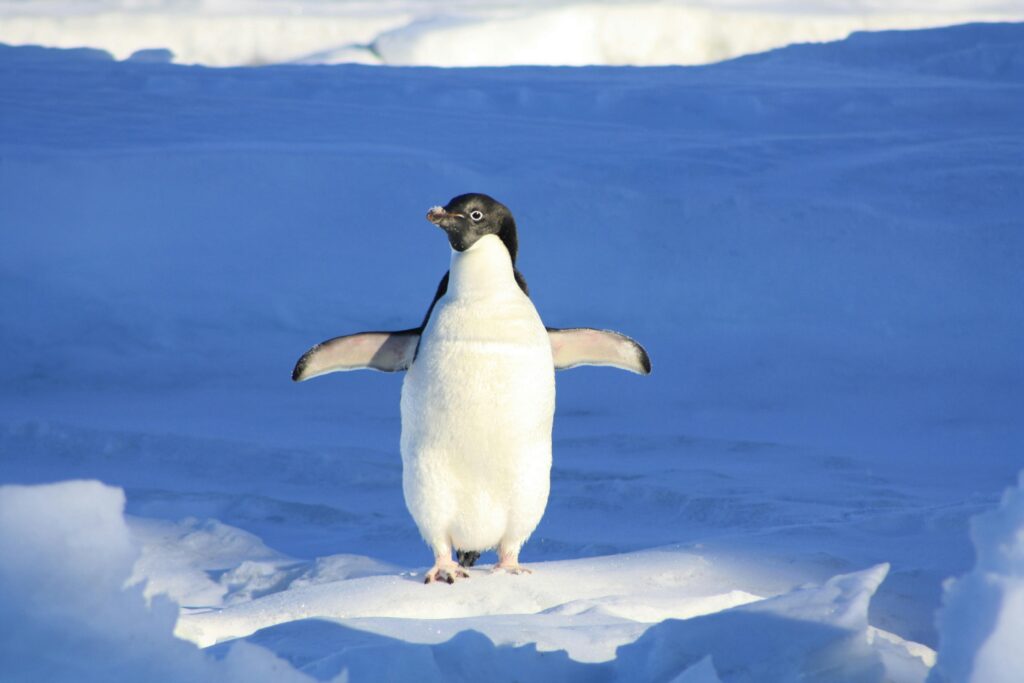
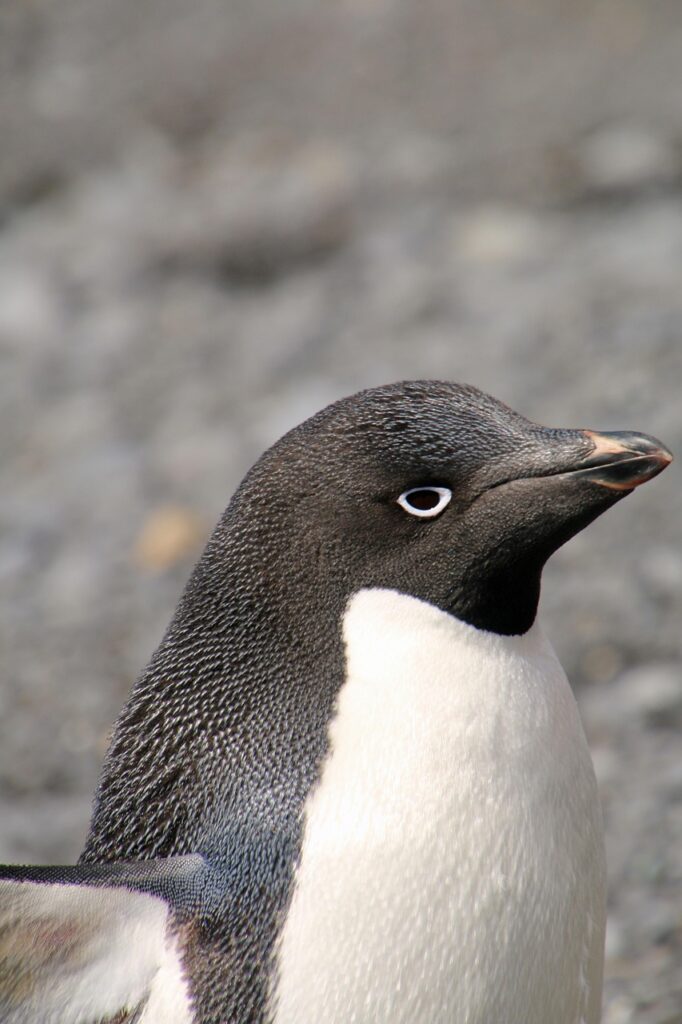
Standing about 70–75 centimeters tall, with a black head, a distinct white eye ring, short legs, and flipper-like wings, the Adélie penguin looks exactly like what most people imagine a “classic penguin” should be.
Researchers and explorers who have spent time in Antarctica often say the same thing:
“In the end, Antarctica is remembered through Adélie penguins.”
This article looks beyond their cute appearance and records the Adélie penguin as it truly is—
a species that builds homes, chooses partners, raises families, and survives one of the harshest environments on Earth.
Habitat and Ecology of the Adélie Penguin
Adélie penguins are found all around the Antarctic continent and its surrounding islands.
Their largest breeding colonies are concentrated along the Antarctic Peninsula and nearby coastal regions.
After months of darkness and extreme cold, the Antarctic summer slowly returns.
Around November, Adélie penguins begin their journey from the sea back to land, gathering at traditional breeding sites with remarkable precision.
They choose locations that are:
- close to the ocean,
- elevated enough to avoid flooding, and
- relatively safe from predators.
These sites grow into large colonies, often made up of hundreds or even thousands of breeding pairs.
Within this crowded “penguin town,” each individual is able to locate its own nesting area with surprising accuracy.
The Stone-Building Architect
One of the most fascinating behaviors of Adélie penguins is their nest-building ritual.
Unlike many other penguin species, Adélie penguins construct nests using small stones before laying their eggs.
As the breeding season begins, male penguins collect pebbles one by one from nearby beaches and rocky ground.
These stones are carefully arranged to lift the eggs off the ice, protecting them from meltwater and freezing surfaces.
But stones serve a second purpose.
A male Adélie penguin offers stones to a female as a form of courtship.
If the female accepts the stone, the partnership is formed.
Studies have shown that males who provide better and more abundant stones have higher mating success.
For this reason, Adélie penguins are often described with a familiar comparison:
Humans offer rings. Penguins offer stones.
This unique blend of architecture and affection is why Adélie penguins are known as the charming architects of Antarctica.
Mating and Life as Parents
Adélie penguins do not always mate for life.
Some pairs reunite across breeding seasons, while others form new partnerships each year.
What matters most is cooperation during the breeding period.
Females typically lay two eggs, and both parents take turns incubating them.
After hatching, one parent remains with the chicks while the other travels to sea to gather food.
As the chicks grow, they eventually join groups known as crèches, where young penguins huddle together for warmth and protection.
Parents return periodically, recognizing their own chicks by voice among hundreds of others.
Few scenes in Antarctica are as quiet and moving as a parent penguin returning from the sea, carrying food for its waiting chick.
A Strong Personality: “The President of the Beasts”
Despite their adorable appearance, Adélie penguins are known for their bold and aggressive personalities.
In Antarctic field camps, they are sometimes nicknamed “the president of the beasts.”
Adélie penguins are:
- fearless,
- highly territorial, and
- quick to confront intruders.
They actively defend their nests from skuas and other threats, often banding together to chase predators away.
They also do not hesitate to confront other penguins that wander too close to their nesting sites.
This behavior is not driven by cruelty or hunting instinct.
It is a clear and consistent message:
“This is our home.”
Secrets to Surviving Extreme Conditions
Antarctica is one of the most unforgiving places on Earth, yet Adélie penguins thrive here through a combination of physical and behavioral adaptations.
Their survival tools include:
- densely packed feathers,
- a thick layer of insulating body fat, and
- the ability to trap warm air between feather layers.
Equally important is their social behavior.
By gathering closely together and adjusting their movements with the seasons, Adélie penguins minimize heat loss and conserve energy.
Their diet—primarily krill, small fish, and squid—is supported by rich feeding zones where cold and warm currents meet.
They often hunt in groups, increasing efficiency and survival chances.
Humans, Media, and Global Popularity
Adélie penguins are unusually curious about humans.
They often approach cameras, observe researchers closely, and show little fear of human presence.
This personality has made them stars of documentaries and online videos.
In countless films and viral clips, Adélie penguins appear confident, expressive, and endlessly fascinating.
Through media, their daily lives have reached audiences far beyond Antarctica, turning them into one of the most recognizable penguin species in the world.
Adélie Penguins in Culture and Storytelling
From nature documentaries to children’s books, Adélie penguins appear frequently in storytelling.
Their small size, strong personality, and resilience make them natural protagonists.
They are not just animals on ice.
They are characters with recognizable struggles, choices, and determination.
This is why Adélie penguins continue to inspire stories across film, literature, and art.
A Species at Risk and Our Responsibility
Today, Adélie penguins face growing threats from climate change.
Shrinking sea ice, shifting food sources, and increased fishing pressure are already affecting breeding success in some regions.
Protecting Adélie penguins means protecting the Antarctic ecosystem as a whole.
Their survival is closely tied to the health of the Southern Ocean.
What happens to Adélie penguins reflects what is happening to Antarctica itself.
Conclusion: The Penguin That Makes Us Smile—and Reflect
Adélie penguins are more than cute Antarctic icons.
They are builders, partners, parents, and survivors.
They remind us that even in the harshest environments, life finds ways to endure through cooperation, care, and resilience.
Penguin Friends records their stories not just to admire them—but to remember, respect, and protect them.